
About The Author
Dr. Aruna is a General Dental Surgeon who has done her Masters in Clinical Practice from Bangalore. She covers topics related to dentistry, medicine, and how to keep your oral hygiene in check to stay fit. She is now practicing as a general dentist at Sri aakritis dental clinic, sarjapur road Bangalore. Keep reading her articles which bring public awareness for better oral hygiene.
In your late teens, you might think that you don’t have to bear those pain due to tooth
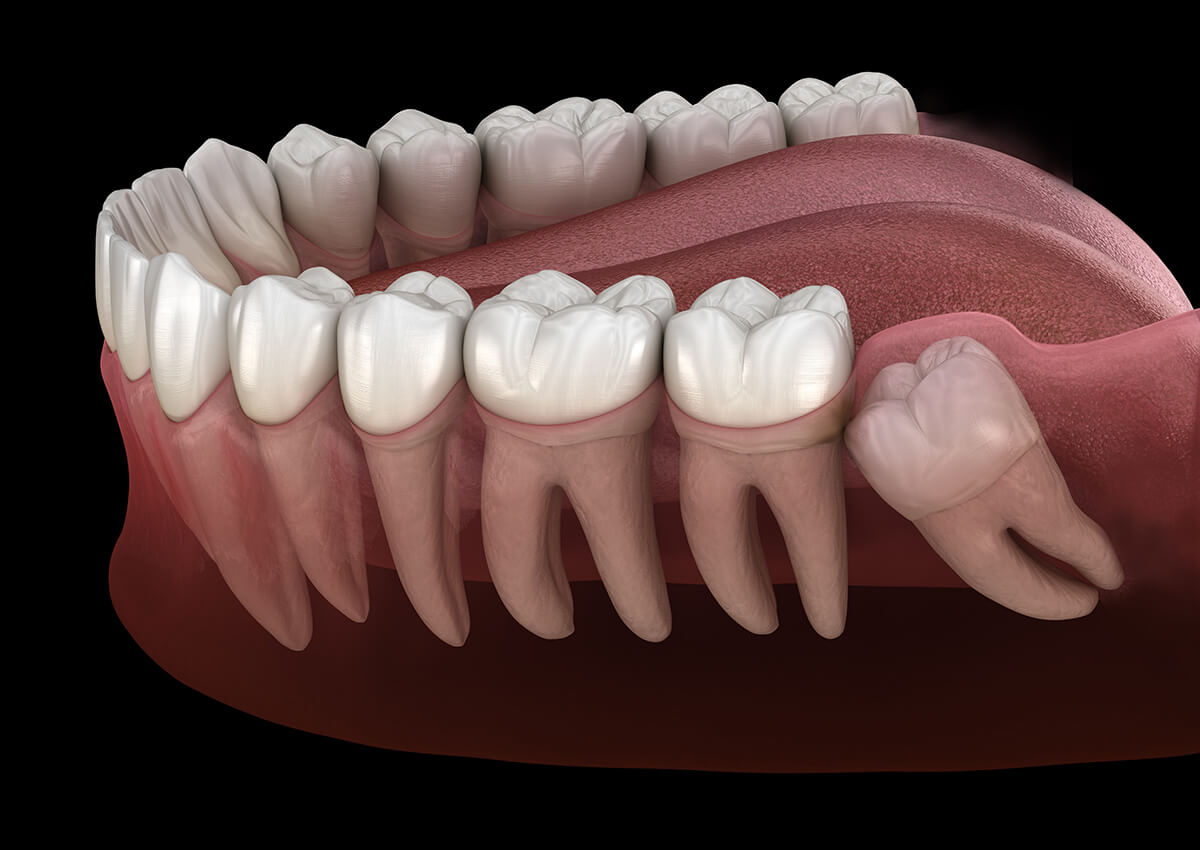
eruption, but you might be wrong in this scenario. During early adulthood, you may have to undergo some discomfort or pain which may come and go in a repeated manner. These kinds of symptoms can happen because of your third molar or ‘wisdom tooth’.
Does every one of us have wisdom teeth?
Though in general, a set of 32 teeth is considered permanent teeth including those four wisdom teeth. But many of us may have less than that and sometimes in some people, all four wisdom teeth can be absent.
How do we know that we have impacted wisdom teeth or not?
If those wisdom teeth are present in your jaw and your dentist can see them clinically, which means they have erupted to their occlusal level and might help you in chewing food. Though they are residing at the very corner of your mouth and hardly help you in doing the same. A single dental x-ray can tell you whether a wisdom tooth is getting impacted inside your jaw bone or not . That’s why you need to visit your dentist if you are feeling pain and discomfort at the corner of your mouth.
What are the symptoms you might have due to impacted wisdom teeth?
● Pain in respect to the upper or lower jaw
● Discomfort
● Gum tissue irritation
● Recurrent pain around the tooth
● Pressure sensation at the back of your jaw
Why it is advised to remove your wisdom teeth by your dentist?
● Most of the time if the wisdom teeth are impacted/embedded inside your jaw bone or have partially erupted, it is not that easy to clean the area around the tooth on a regular basis as it is not easily accessible for brushing or flossing.
● If it has erupted completely and you are not convinced to remove it immediately according to your dentist’s advice, you should take care of your oral hygiene in that area and you have to make a conscious effort to visit your nearest dentist to check whether it is caries-free or not. A lack of oral hygiene maintenance can make those areas more carries prone.
What can happen if a wisdom tooth remains impacted inside your jaw bone?
● In general, it is common to have impacted wisdom teeth until it’s not bothering you much. Sometimes cysts or tumors can develop around the tooth though it’s rare. Cysts in respect to that tooth can hollow out your jaw bone from inside and make your jaw weeker. Hence it becomes more prone to fracture
● You might feel pain, discomfort, and pressure given by those extra sets of molars to the other teeth
● Recurrent pericoronitis
● Sinus problems – you might feel pain and congestion over your cheek area due to the infection in respect to those impacted tooth
● cavities – due to bacterial infection in your gums they can get swollen, harbour the bacteria and cavities might form which makes the tooth more weeker and difficult for extraction
● Crowding – those extra sets of molars can create crowding and can impair basic oral hygiene. take an expert opinion from your Doc as your dentist can assess the position, condition with respect to your wisdom teeth and help you to make a decision.
If your wisdom teeth don’t hurt then why remove them?
Extraction can be done in a preventive way. As you are not feeling any pain right now that doesn’t mean it will not cause any pain or discomfort in near future. Generally, our jaw size is inadequate to make some space for the eruption of our four wisdom teeth. That’s why it can erupt partially at an angulation to another tooth besides it, which makes it more infected and caries prone. As you age the tendency of your bone getting harder increases, your decayed wisdom tooth might fracture while removing it. Thus the difficulty level of removal increases as you postpone your wisdom teeth extraction. You might wait for a few months before undergoing any wisdom tooth removal. But if it’s troubling you, you should listen to the dentist’s advice and go for an extraction.
What are the complications you might face after surgical extraction of your third molar or wisdom tooth?
● Pain and Swelling- The patient will be on NSAIDs (nonsteroidal anti-inflammatory drugs), moderate analgesics along with narcotic drugs(painkillers), and antibiotic coverage to avoid any kind of pain and postoperative swelling.
● Dry Socket- you might experience severe pain on the 3rd day after extraction. This happens due to the early dissolution of a blood clot which helps in healing. To avoid that, your dentist can give you a dressing with an antiseptic solution in that area.
● Bacterial infection- Though chances of getting a bacterial infection are quite rare as patients will be on antibiotic coverage before the procedure to reduce the bacterial load.
How to choose doctors if you want to go for a wisdom tooth extraction?
● You can go through the reviews of those who have already been through the procedure in multiple medical forums and if you are worried about some negative review, you can always consult with your doctor about the matter.
● Look for the experience of your dentist and positive patient stories.
● You can also look for the success rate of the extraction done by your dentist.
● And if still, you are afraid of going through the procedure, you can always consult with your dentist regarding all your queries.
Are you still confused about where to go for such consultations?
You can come to Sri Aakrthis Dental clinic led by Dr. Prithviraj Kallakunta, oral and maxillofacial surgeon, who has done multiple wisdom teeth impaction extractions with 99% positive patient stories and zero postoperative complications. So come here, visit us and get your extractions done within your budget, and experience a pain-free extraction.
Recent Comments